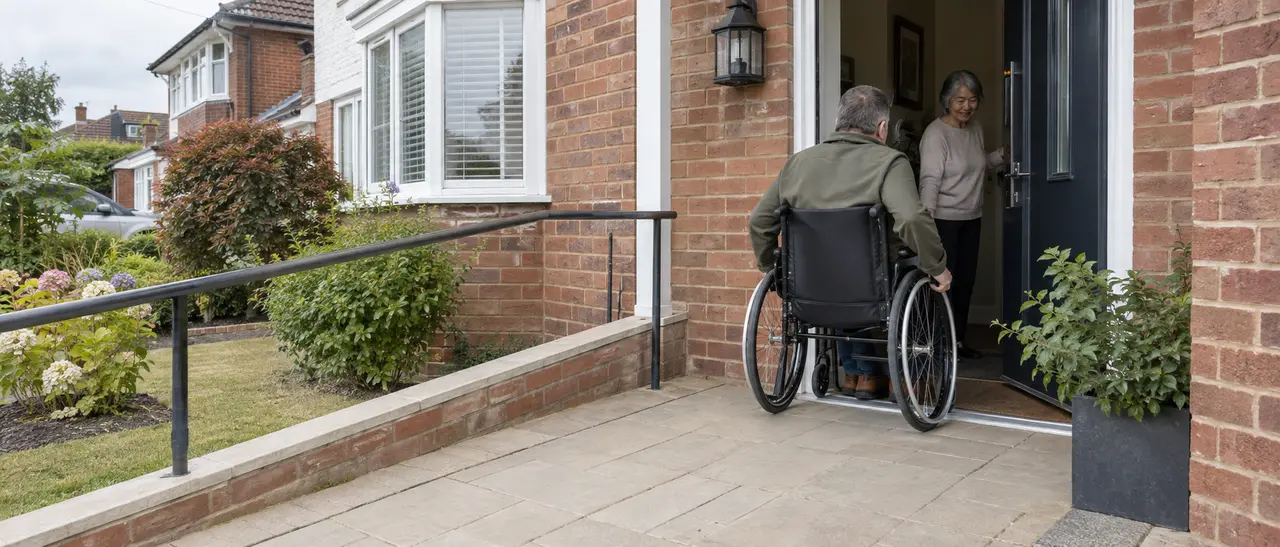
A decision about daily life, not just building costs
Adapt the home or consider moving?
A major adaptation can make a familiar home workable for years. In another property, the same money may still leave narrow rooms, an inaccessible garden and a difficult location. Moving can solve those problems, but it brings costs, disruption and the loss of familiar neighbours. Compare the whole situation instead of one quotation.
Write down what must change now
List the non-negotiable needs: safe bathing, a usable entrance, access to a bedroom and toilet, or space for carers and equipment. Then note difficulties that are inconvenient but manageable.
This helps separate the essential work from attractive extras. Include likely changes that have been discussed by health professionals, without trying to predict every possibility. A flexible room or slightly wider route may be more useful than a highly specialised feature.
Can this particular house be adapted well?
A steep plot, narrow frontage, split levels or small rooms can limit what alterations achieve. A home lift may fit structurally but take away important space. A rear extension may provide an accessible bedroom and shower room while making the garden hard to reach.
Ask a designer or occupational therapist to examine connected routes, not just the room being changed. Planning permission, building regulations, lease restrictions and shared access can influence the answer.
Compare complete costs
An adaptation budget should include professional advice, applications, structural work, electrics, plumbing, finishes, temporary arrangements and making good. Allow for servicing of lifts or powered equipment. Moving costs include legal work, surveys, removals, possible repairs and any adaptations still needed at the new home. A cheaper house might not be cheaper once transport, heating and care arrangements are considered.
Location can be difficult to replace
Being close to family, friends, a GP, shops and familiar public transport has practical value. A more accessible bungalow may increase isolation if it is far from support.
Equally, remaining in a house that can't be left independently can restrict life despite good internal alterations. Visit a possible new area at ordinary times of day and test routes with the mobility aid that will be used.
Try reversible changes first when time allows
Equipment, furniture changes and minor alterations can show what helps before committing to a large project. This isn't suitable where there is immediate danger or urgent discharge from hospital, but it can prevent an expensive decision based on a brief showroom demonstration. Short-term equipment may also support recovery while longer plans are considered.
Bring the decision together
An occupational therapist can define functional needs. A surveyor, architect or experienced adaptation designer can say what the building can take. An independent financial adviser may be useful where property value, borrowing or care costs are involved.
Give each professional the same outline of the need and ask them to state their assumptions. A builder’s price cannot be compared fairly with another if one includes decoration, fees and temporary facilities while the other covers only the main construction. Build a short list of what life should be like afterwards: getting outside independently, reaching a toilet at night, receiving family or staying near existing support.
There may not be a perfect answer. The sensible choice is usually the one that deals with the essential needs, remains affordable to run and leaves enough flexibility for ordinary life.