Comfort, transfers and room to move
Choosing an adjustable bed
An adjustable bed can raise the back, knees or legs and may help somebody change position. The movement doesn't solve every sleeping or transfer problem. The final bed height, mattress, controls and space around it often matter more in daily use than the number of powered sections.
Begin with the reason for changing the bed
Someone may need help sitting upright, reducing pressure, managing swelling or standing from the edge. These are different needs. Medical advice may be required for breathing, circulation, skin or pressure problems. A salesperson can demonstrate mechanisms but should not diagnose the cause of pain or prescribe a pressure-care surface without the right clinical input.
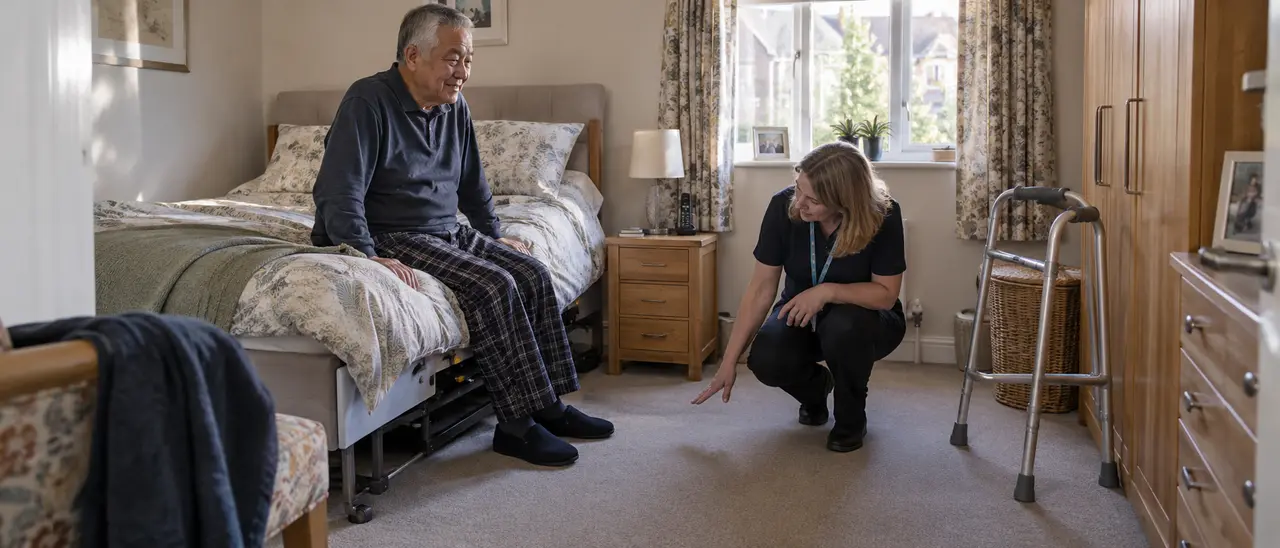
Bed height changes the transfer
The person should normally be able to sit securely at the edge with their feet supported before standing, subject to their assessed technique. A thick mattress or added topper changes the height.
Some powered beds raise the whole platform, while others only profile it. Try getting in and out on the same side and in the same footwear used at home.
The mattress must work with the base
A mattress needs enough flexibility for the moving platform. Firmness labels are inconsistent, so a trial is valuable.
Pressure-relieving mattresses serve a clinical purpose and need assessment where skin is at risk. Split adjustable beds allow partners to choose different positions, but the join, separate controls and overall width may affect comfort and room layout.
Controls and power failure
Handsets should be easy to grip, read and reach from the sleeping position. Wireless controls can be misplaced. Find out whether there is an emergency lowering method and who could operate it.
Cables must not cross walking routes or become trapped by the frame. Powered movement should stop safely if bedding or an object obstructs it.
Leave space for people and equipment
A wider bed can remove the route for a frame, wheelchair or carer. Mobile hoists need clearance beneath the frame and room to turn; profiling beds with solid bases might not provide it. Delivery teams need to negotiate stairs and doorways. Find out whether the quoted service includes assembly, removal of the old bed and demonstration to the user.
Try before committing
Spend time in the positions likely to be used instead of accepting a brief seated demonstration. Check returns, mattress guarantees, servicing and which parts are covered.
Delivery access is easily overlooked. Measure the narrowest doorway, turn on the stairs and space beside the bed, and tell the supplier about lifts or restricted parking. Divan-style adjustable beds may arrive in sections, but headboards and mattresses can still be awkward. Check the final height before disposing of the existing bed. If the user shares the room, both people should try the arrangement and reach their own lights and belongings. Some beds are sold with massage or heating features which add controls but might not address the original need. Concentrate first on the positions, transfer and mattress that will be used every night. A written assessment or short trial can be more valuable than an impressive list of settings.