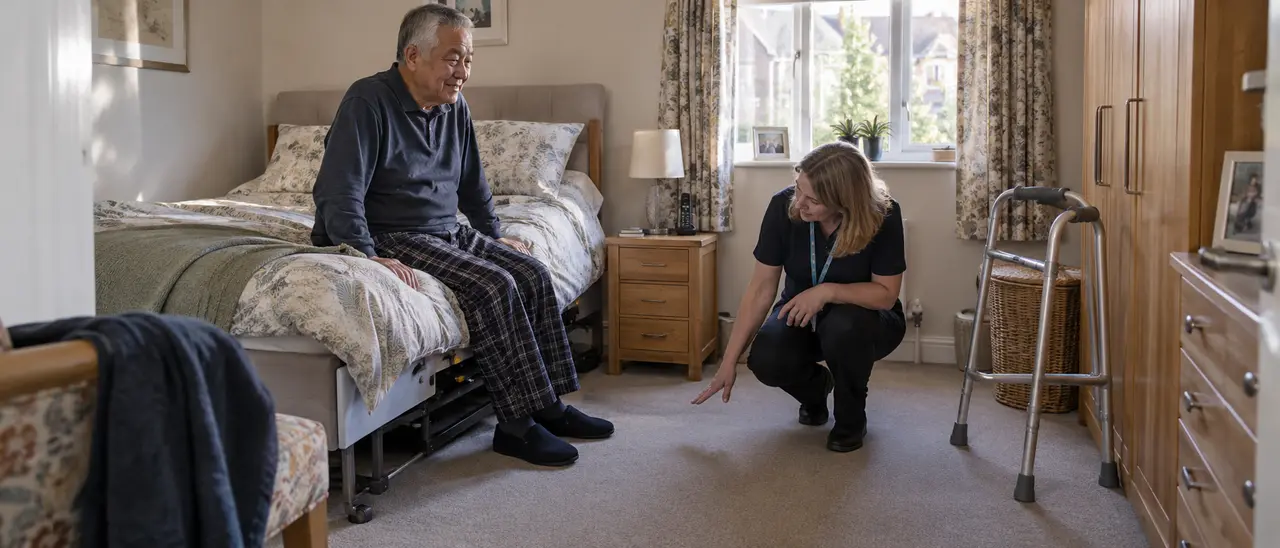
Getting in, getting out and moving safely at night
A bedroom that is easier to manage
A bed that feels comfortable may still be too low to stand from, too high to get onto or placed where there is no room for a walking frame. Bedroom changes should cover sleep, transfers, dressing and the route to the toilet, especially during the night. They should also respect privacy and the needs of a partner who shares the room, instead of turning the bedroom into a clinical space.
Bed height and the way the person transfers
Raising a bed can make standing easier for one person and leave another unable to get their feet firmly on the floor. Mattress depth changes the final height. Watch whether the person sits, slides, pivots or uses a frame.
Bed raisers need to match the bed and be fitted securely; improvised blocks are unsafe. If carers assist, they also need working space and a method that protects both people from injury.
Adjustable beds and profiling mattresses
An adjustable bed can raise the back or legs and may help with positioning, pain or getting upright. It doesn't automatically make standing easier, and split beds can affect how couples use the room.
Check mattress compatibility, controls, power-failure arrangements and the space needed for movement. Medical needs such as pressure care should be assessed, because comfort mattresses and pressure-relieving surfaces aren't interchangeable.
Space around the bed
A clear route on the side normally used for transfer is essential. Wheelchairs, hoists and walking frames need more room than a person walking unaided. Moving the bed may solve the problem without building work, though access to sockets, radiators and windows must remain safe.
Loose bedding should not trail onto the floor. Keep the bedside light, phone, glasses and water within easy reach without stretching.
Night-time lighting and the route to the toilet
A switch reachable from the bed prevents standing in darkness. Low-level lighting can guide the route without fully waking the household, provided changes in floor level are still clear. Check doors, rugs and furniture along the route. A bedside commode can be useful in some circumstances, but privacy, cleaning, stability and the person’s preferences all matter. It should not be introduced simply because the bathroom is awkward.
Storage and dressing
Clothes used often should be reachable without climbing or deep bending. Pull-down wardrobe rails can help but require enough strength and clearance. A stable chair with arms provides support for dressing; the bed edge may be too soft.
Long-handled aids can assist with socks and shoes after some operations or with limited movement. Good daylight and a full-length mirror at a useful height make dressing easier for many people.
Considering a downstairs bedroom
A downstairs room can remove the need to use stairs, but it should connect to a suitable toilet and washing facilities. Think about privacy, visitors, heating and emergency escape before converting a living room.
If the arrangement is temporary, screens, storage and portable equipment may be enough. For longer use, sound insulation, daylight and a door that closes properly can make the room feel like a bedroom rather than a bed placed in a family space. A smoke-alarm and escape plan should reflect the person’s ability to move without help.
Where a hoist may be needed, get advice before buying the bed or fixing overhead tracks. Ceiling structure, travel path and the position of furniture all affect the installation. Mobile hoists need generous floor space and suitable clearance beneath the bed.