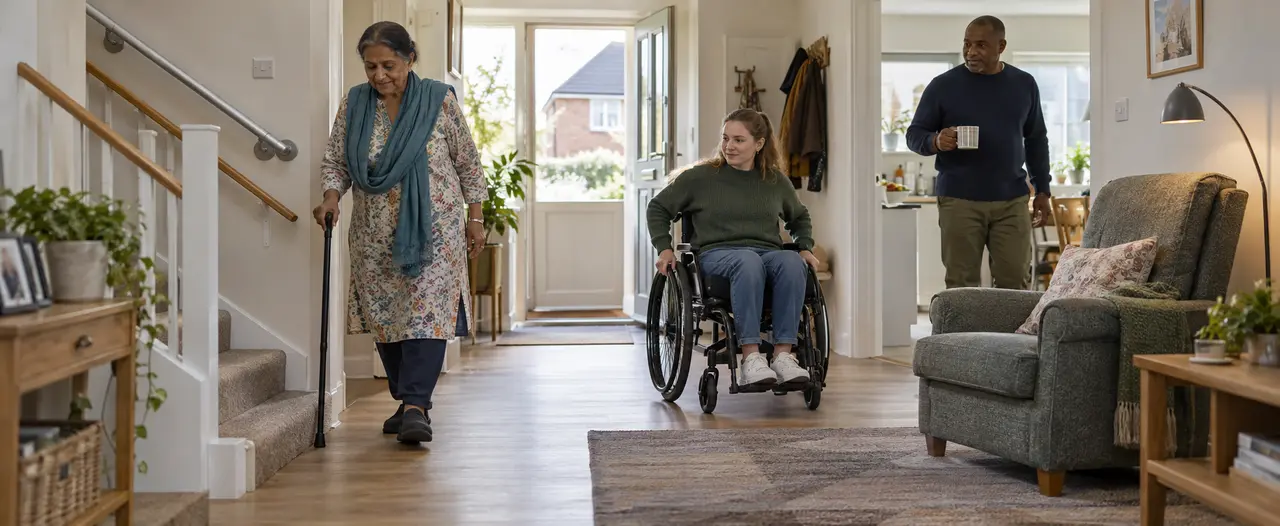
Safer movement around familiar rooms
Reducing falls without restricting everyday life
Falls are often blamed on one loose rug, but there may be several things happening together: weaker legs, a medicine change, poor lighting, hurried trips to the toilet and an awkward step. Altering the house helps most when health, movement and daily habits are considered at the same time. The person should remain involved in deciding what changes; a safer home still needs to feel like their home.
After a fall or sudden change
A fall with injury, dizziness, loss of consciousness or new weakness needs medical attention. Even without injury, repeated falls or near misses are worth discussing with a GP, pharmacist or falls service. Medicines, eyesight, blood pressure, feet and muscle strength can all affect steadiness. Write down where and when incidents happen. A pattern around getting out of bed, using stairs or standing after meals may point towards a particular assessment.
Lighting should remove shadows, not create glare
Increase light at stairs, landings, entrances and the route to the bathroom. A bright bare bulb can produce glare while leaving corners dark, so use shaded fittings and even coverage. Two-way switches at both ends of a staircase prevent walking into darkness.
Night lights or movement sensors can help, but the light should come on before the difficult point and remain on long enough. Keep switches easy to reach from the bed and doorway.
Flooring and the small things underfoot
Secure loose carpet edges and remove trailing cables from walking routes. Rugs are risky when they slide, curl or blend into the floor; thin anti-slip backing may help some rugs, although removal is often simpler on a main route.
Abrupt patterns can look like changes in level to people with impaired vision or dementia. Pets, footstools and bags are unpredictable obstacles, so their usual positions matter too.
Support where it is actually needed
A rail beside a step, toilet or bed should be placed for the movement the person makes and fixed into a structure that can carry the load. Furniture isn't reliable support unless designed and positioned for it.
Walking aids need the right height and type; borrowed sticks are often too long or too short. Physiotherapy may improve strength and confidence, while an occupational therapist can examine transfers and the home layout.
Footwear, rushing and carrying
Loose slippers and walking in socks can reduce grip. Shoes that fit securely, have a broad heel and fasten properly are generally easier to control. Many falls happen while carrying washing, drinks or items needed upstairs. A small trolley may help on one level, but not near steps. Store duplicates of frequently used objects on both floors and allow enough time for doorbells, telephones and toilet journeys.
Make a plan for getting help
A personal alarm, carried phone or voice-controlled device can make help easier to call, but it must be worn, charged and within reach. Agree who will respond and how they can enter.
After a fall, confidence can shrink faster than physical ability. Avoiding all movement may then lead to weaker muscles and greater dependence. A falls team, physiotherapist or occupational therapist can help someone rebuild safe activity at a sensible pace. Family members can help by listening to what feels unsafe rather than taking over every task.
Review the home again after any change in walking aid, eyesight, medicines or health. Equipment placed months ago may no longer be in the best position.