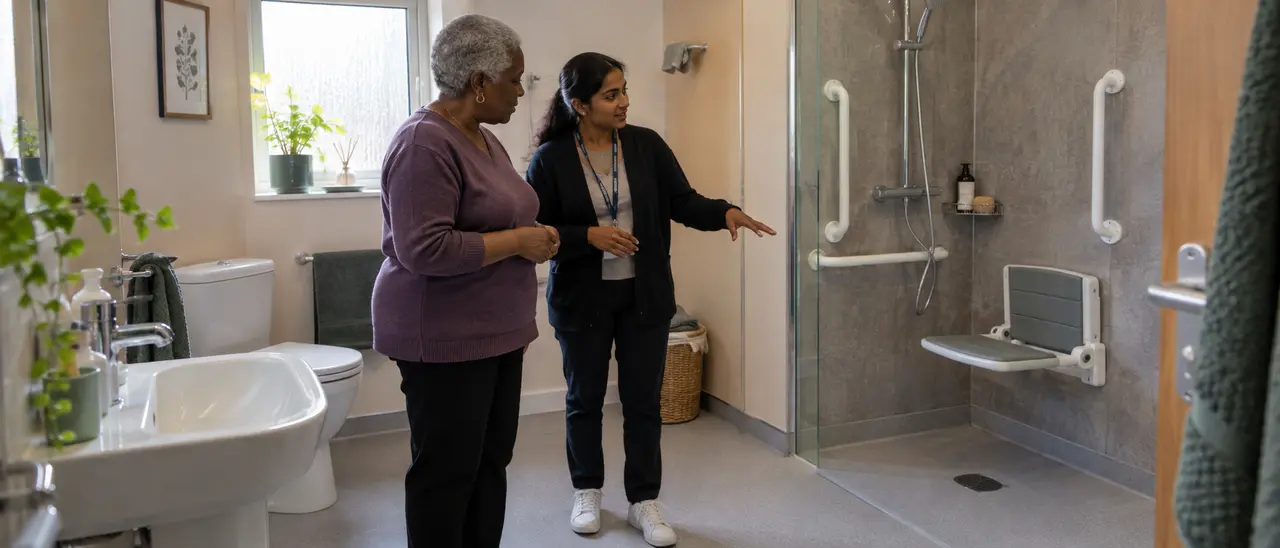
Useful support in the right position
Grab rails need more thought than they appear to
A grab rail is inexpensive compared with most adaptations, yet a few centimetres can decide whether it helps. The right position follows the movement: pulling up, pushing to stand, steadying during a step or turning beside the toilet. Copying a photograph from a catalogue isn't enough.
Watch the movement before marking the wall
Notice which hand reaches first, where the feet are and whether the person pulls or pushes. A vertical rail can help with pulling and changing hand height.
A horizontal rail may give steadying support or help somebody push up. Angled rails suit some movements but can let a wet hand slide. The answer may change between getting into a shower and standing from a toilet.
The fixing must carry the expected load
Tiles and plasterboard are finishes, not automatically a safe structure for a weight-bearing rail. The installer needs to know what is behind them and use a suitable fixing or reinforcement. Bathroom waterproofing must remain intact.
On masonry, concealed pipes and cables still need locating. Ask the installer to explain how the rail is supported instead of accepting several screws as proof.
Suction and temporary rails
Suction rails can lose grip through surface texture, movement, contamination or a change in temperature. Some include warning indicators, but they still require frequent checks and a suitable smooth surface. They should not be treated as a permanent weight-bearing solution for a person who would fall if the rail detached. A floor-to-ceiling pole or properly fixed temporary system may suit some rented or short-term situations better.
Rails beside toilets, beds and steps
A toilet rail may need to support lowering as well as standing. Fold-down rails need space and firm wall support; floor-mounted frames are another option.
Bed rails aren't general grab rails and can introduce trapping or climbing risks, so use equipment assessed for the person. Outside rails need weather-resistant materials, secure ends and a shape that doesn't catch sleeves or bags.
Check the surrounding movement after the rail is fitted. A projecting rail can narrow a doorway, catch a sleeve or prevent a shower screen opening. Fold-down models should stay firmly in both positions and be easy for the user to lower without overreaching. In a shared bathroom, other people may put towels over the support or leave the toilet roll where it obstructs a handhold, so agree what must remain clear. Fixings can loosen over time, especially in a busy bathroom or outside. Include rails in ordinary household checks and stop using one that moves, cracks the finish or pulls away from the wall. Repairing the structure is safer than tightening a failing fixing repeatedly. A clean, secure rail in the correct place should feel like part of the room instead of an improvised addition.
Colour, temperature and grip
A rail that contrasts with the wall can be easier to find for somebody with reduced sight. Polished metal may be cold and slippery when wet.
Textured finishes can improve grip but must remain cleanable. Very thick or thin rails may be hard for painful hands. Let the user hold samples if possible instead of choosing by appearance alone.
Ask for help with position and type
An occupational therapist can observe the movement and suggest useful positions. A competent installer should check the structure and services before drilling.