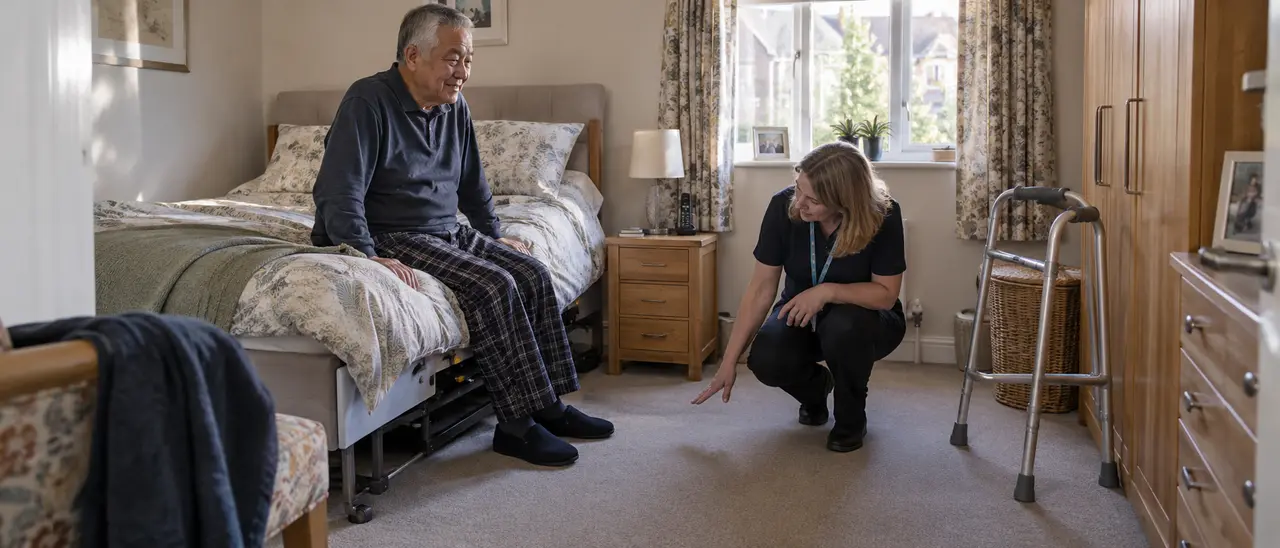
Solve the first few days before redesigning everything
Preparing the home for a return from hospital
A person may be medically ready to leave hospital while their usual bed, stairs or bathroom is no longer manageable. Discharge planning should establish how they will enter, sleep, use the toilet, wash, eat and call for help. Temporary arrangements can be sensible while recovery is still changing.
Ask what the person can do now
Ability before admission may no longer be a safe guide. Ask the ward team what transfers, walking distance and personal care the person manages at discharge, and what help is expected.
Find out whether stairs have been assessed. If instructions are unclear, request a conversation involving the person and whoever will provide support instead of relying on a hurried message.
Before the first night, make sure the person knows how to reach help and that the chosen telephone or alarm works from bed and the toilet. Leave a clear light on the route without creating glare. Pets may need temporary management while walking is uncertain. Food, bedding and frequently used clothes should be reachable, but avoid filling the room with well-meant supplies that block movement. Write down who is visiting and why, because several services can sound similar after a tiring hospital stay. If equipment fails or care doesn't arrive, use the discharge contact provided instead of waiting until the situation becomes a crisis. A brief review after a few days can identify problems that were not visible on the ward.
Check the route into the house
Think about the car-to-door journey, steps, keys, weather and space for equipment. A temporary ramp needs a safe gradient and secure support.
Inside, clear the route to the main chair, toilet and bed without moving familiar possessions unnecessarily. If an ambulance crew or carers need access, make sure gates, parking and door arrangements have been discussed.
Bed, toilet and washing arrangements
The usual bed may be too low or upstairs. Equipment such as a toilet frame, commode, shower chair or temporary bed should arrive before it is needed, with instructions.
A downstairs bed is only part of the answer if there is no usable toilet. Check privacy, night lighting, heating and how equipment will be cleaned.
Medicines, food and appointments
Obtain a clear medicines list and understand what has changed. A pharmacist or clinical team should answer medicine questions; don't rely on old packs left at home. Arrange reachable food and drinks for the first day. Note follow-up appointments, transport and contact numbers. Hearing aids, glasses, walking aids and chargers are easily left behind during discharge.
Do not assume relatives can provide every task
Family help should be agreed, not presumed. Lifting, intimate care, night support and medicine management may require training or services. Find out what care package, rehabilitation or community nursing has been arranged and when it starts. If the plan is unsafe, say exactly which task can't be managed instead of giving a general objection.
Review temporary changes as recovery develops
Equipment suitable for the first week may become unnecessary or restrictive. Keep contact details for returns and reassessment. Major work is better based on a clearer long-term need unless there is a pressing safety reason.