Reach, grip, seating and safer routines
Making the kitchen easier to use
Kitchen adaptations are most useful when they follow the way somebody actually prepares food. Lowering every surface is rarely the answer. A mixture of heights, reachable storage and a safe place to sit may work better, particularly in a shared household. Watch one complete meal being prepared before changing the layout. This shows which journeys, reaches and lifting tasks actually cause trouble.
Arrange the tasks, not just the cupboards
Think through making tea, preparing a simple meal and carrying it to the table. Keep the kettle, mugs and tea close together so there is less lifting and turning. A kettle tipper or hot-water dispenser may help somebody with weak grip, but it must be easy to fill and clean.
Sliding a mug along a clear worktop can be safer than carrying it. Frequently used ingredients should be visible and reachable without stretching over a hot hob.
A place to sit can save energy
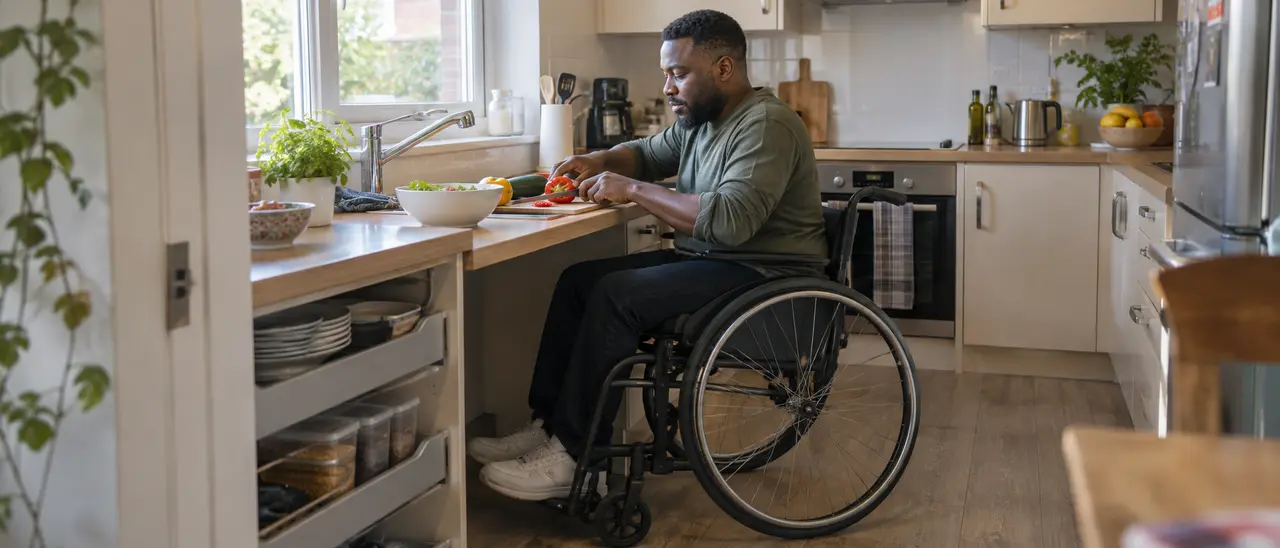
A stable perching stool allows some people to prepare food without standing for long. It needs enough space and the right height for the worktop. Ordinary chairs with wheels or folding stools can move unexpectedly. For wheelchair users, knee space beneath a section of worktop may make food preparation and washing up easier. Make sure hot pipes and the underside of appliances are protected where legs come close.
Handles, taps and controls
Lever taps and D-shaped handles are often easier for painful hands, but test the force and direction of movement. Appliance controls should be visible without bending and should give clear feedback.
Front-mounted hob controls can be easier to reach, though they need protection from accidental operation. Induction hobs reduce the open heat around a pan but require compatible cookware and might not suit every medical device; check the manufacturer’s advice.
Storage that comes to the user
Pull-out shelves, drawers and carousel units can reduce reaching into the back of a cupboard. They also need clear floor space when open.
Heavy pans are safer in mid-level drawers than on a high shelf. Avoid filling accessible storage so tightly that objects fall out when the door opens. Labels, good contrast and consistent locations may help somebody with impaired vision or memory difficulties.
Fire, heat and forgetting
Smoke and heat alarms should be correctly positioned, tested and audible throughout the home. Some people benefit from automatic cooker shut-off devices, but these should be chosen around the type of cooker and assessed risk.
Keep tea towels away from the hob and avoid trailing flexes. If memory problems are affecting cooking, involve the person in deciding safer routines instead of simply removing everything familiar.
Get advice before rebuilding the room
An accessible kitchen can be expensive, and poorly chosen heights are hard to undo. Try equipment first where possible and ask an occupational therapist or experienced designer to watch the main tasks.
In a shared kitchen, a lowered preparation area beside a standard-height surface may suit different users with less machinery and maintenance. Leave room to change appliances later. Check that doors, drawers and dishwasher racks can open without trapping a wheelchair or blocking the only exit.
Ask the designer to show socket positions, lighting, ventilation and the route for carrying hot food. A glossy drawing may look spacious while leaving too little room once handles, bins and chairs are added.